
The angel stitch is a lovely crochet stitch, with its unique cluster and chain spaces producing designs that resemble angel wings. This makes the stitch very appropriate for use on light clothing such as scarves, shawls, and tops. You can also apply it on baby items and blankets for a lacy finish.
This guide will take you through everything there is to know about the angel stitch, including how to crochet it.
Angel Stitch Definition
Angel stitch is a design stitch in crocheting that produces an open, lacy effect through the use of clusters, chain spaces and tall stitches. The name is applied to various stitches by different designers; hence, it is essential to use the instructions for the particular angel stitch design you are working on.
A popular type of angel stitch is made using triple and double crochet clusters with a repetition of three stitches plus one. Chain spaces create the openings that produce the angel effect of this stitch.
This stitch is quite pretty when done with fine yarn since the openings in the stitch can be easily observed.
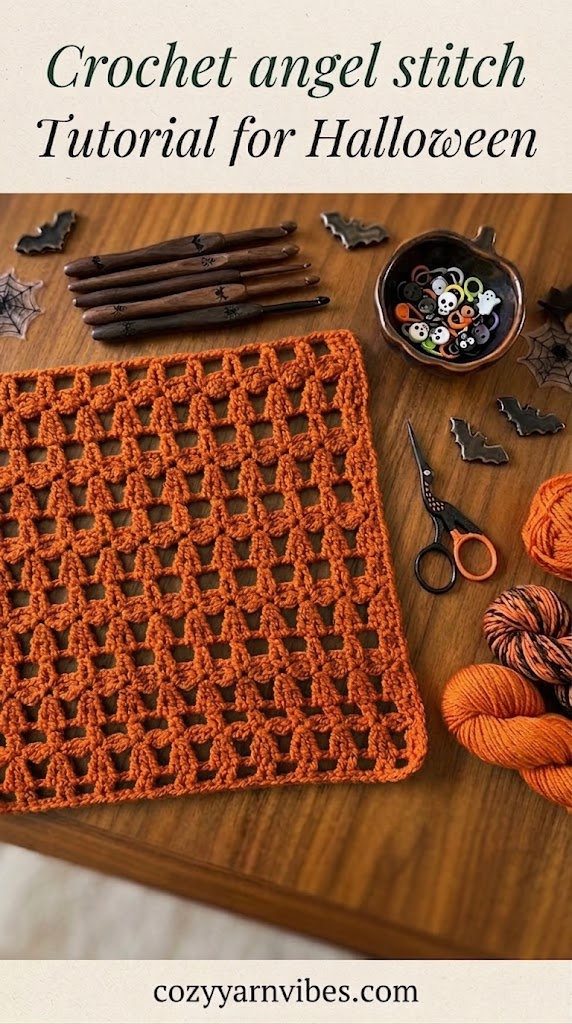
How to Make the Angel Stitch
Special Stitches
2-Double Crochet Cluster (2-dc Cluster)
Yarn over and insert your hook into the stitch. Pull up a loop, yarn over, and pull through two loops. Leave the remaining loops on the hook.
Repeat once more in the same stitch or chain space.
Yarn over and pull through all loops on the hook.
Treble Crochet Cluster (TR Cluster)
Yarn over twice and insert the hook into the first stitch. Complete the stitch until two loops remain on the hook.
Repeat in each of the next two stitches, leaving the final loops on the hook each time.
Yarn over and pull through all remaining loops to complete the cluster.
Row 1: Create the Foundation Clusters
Chain 4. Work 1 treble crochet in the next stitch.
Chain 4, then work a 2-double crochet cluster into the third chain from the hook.
Work a treble crochet cluster across the next three stitches.
Repeat the following sequence across the row:
Chain 4, work a 2-double crochet cluster into the third chain from the hook, then work a treble crochet cluster across the next three stitches.
Continue repeating until only 2 stitches remain.
Chain 3 and work a 2-double crochet cluster into the third chain from the hook.
Work 1 treble crochet in each of the last 2 stitches.
Turn your work.
This row creates the main structure of the Angel Stitch by alternating 2-double crochet clusters and treble crochet clusters.
Row 2: Form the Angel Heads
Chain 1.
Work 1 single crochet into each of the first 2 treble crochet stitches.
Chain 3 and work 1 single crochet into the next treble crochet cluster.
Chain 5 and work another single crochet into the same treble crochet cluster.
Repeat the following sequence across the row:
Chain 3, single crochet in the next treble crochet cluster, chain 5, single crochet in the same cluster.
Continue across all treble crochet clusters.
Chain 3 and work 1 single crochet into each of the last 2 treble crochet stitches.
Turn your work.
The chain-5 spaces create the rounded “heads” of the angels, while the chain-3 spaces form the sides of the design.
Row 3: Connect the Angel Shapes
Chain 4 and work 1 treble crochet in the next single crochet stitch.
Chain 3 and work 1 single crochet into the next chain-5 space.
Repeat this sequence across the row:
Chain 3, single crochet in the next chain-5 space.
Continue until you reach the end of the row.
Chain 3, then work 1 treble crochet in each of the last 2 single crochet stitches.
Turn your work.
This row creates the open lace structure between each angel shape.
Row 4: Build the Next Row of Angels
Work Row 4 exactly the same as Row 1.
The only difference is that the treble crochet clusters are now worked into:
- A chain-3 space
- A single crochet stitch
- The next chain-3 space
This placement creates the next row of angels directly above the previous row.
Repeat the Pattern
Repeat Rows 2 through 4 for the full stitch pattern.
For the best finished appearance, end your project after completing a Row 3.
Tips for Perfect Angel Stitches
Ensure that your tension is loose, particularly when crocheting the taller stitches.
Take stock of the number of stitches and clusters after every row.
Ensure that all the chain spaces are equal.
The treble crochet clusters should remain even.
Choose a suitable yarn and hook for creating a flexible material.
Practice the stitch with a small sample before embarking on an extensive project.
Lightweight yarn can help make the pattern more visible.
Common Mistakes to Avoid
Angel stitch involves several specific techniques, which means that it is easy to get lost in the process while trying to learn it.
Here are some typical errors:
Omitting a cluster.
Crocheting into the wrong chain space.
Making chain spaces too tight.
Forgetting a turning chain.
Making extra or missing stitches.
Using clusters of different tensions.
Not keeping track of the stitch repetition.
In case your work gets irregular all of a sudden, it is necessary to stop working and count the stitches in order to locate the error and correct it.
Projects You Can Make with the Angel Stitch
The open texture of the angel stitch makes it useful for many crochet projects.
Blankets
Use the angel stitch for lightweight blankets and decorative throws. The open design creates a soft fabric with beautiful texture.
Scarves and Shawls
The lace-like texture is ideal for scarves, wraps, and shawls. Lightweight yarn can create a soft piece with plenty of drape.
Garments
The angel stitch can be used for lightweight tops, cardigans, ponchos, and other garments where you want an open crochet design.
Baby Items
You can use the stitch for delicate baby blankets, wraps, and other decorative baby projects. Choose a soft yarn that is comfortable against the skin.
Home Décor
Try the angel stitch for cushion covers, table runners, decorative throws, curtains, and other home décor projects.
Accessories
Use the stitch for lightweight bags, cowls, scarves, wraps, and other accessories.
Decorative Borders
The open design can also be used as a decorative edging when adapted to fit the project.
Variations of the Angel Stitch
There are many different crochet designs that are referred to as the angel stitch, so when searching for directions there will be more than one type.
Some designs will have clusters of treble crochet stitches that create an open work angel design, while another widely shared design will use a puff like stitch along with single crochet stitches in groups of four.
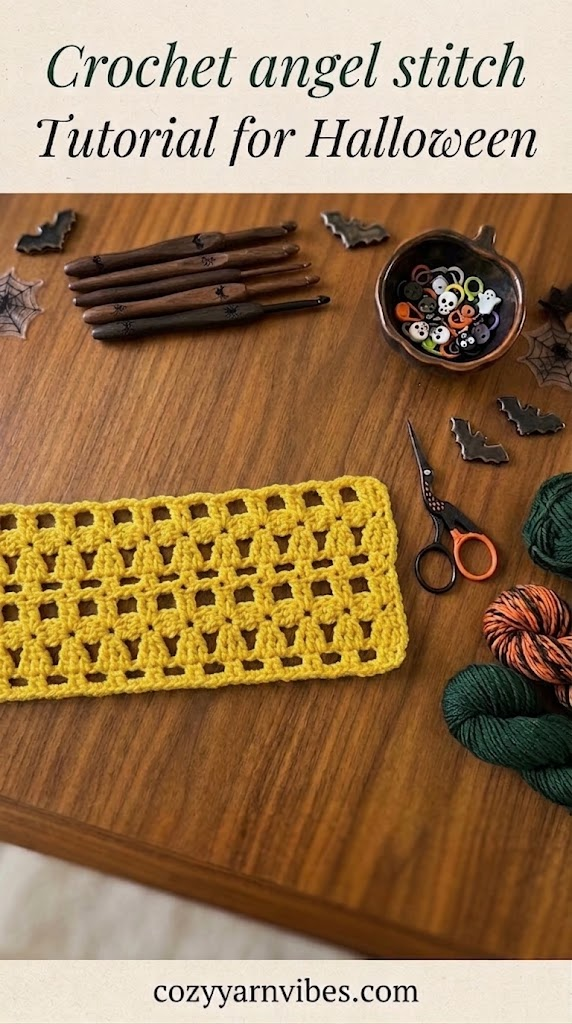
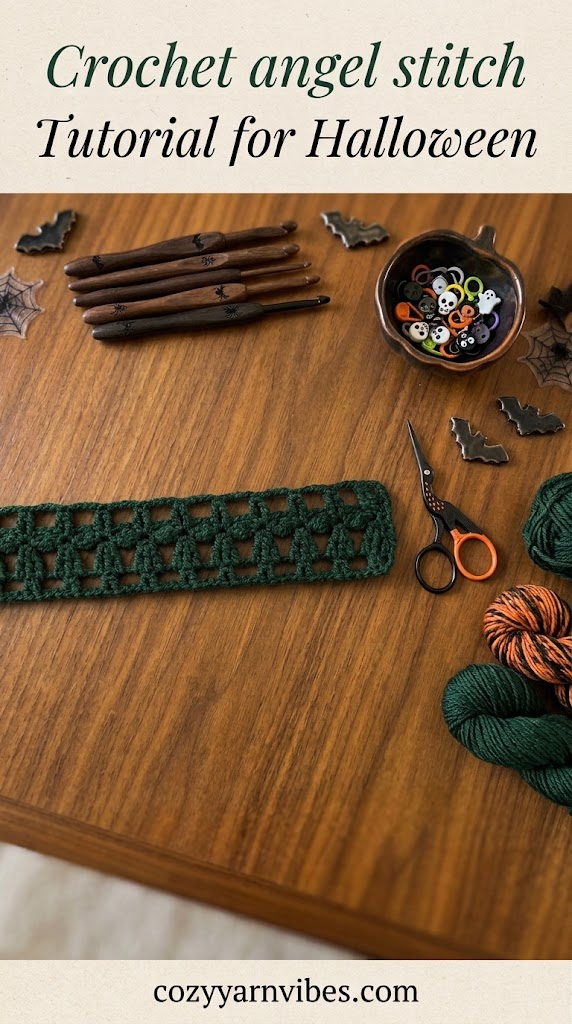
There are even ways to change the appearance of your fabric by using different weight yarns and colors.
More Crochet Stitch Tutorials
Continue building your crochet skills with these beginner-friendly stitch guides:
Half Double Crochet Stitch (hdc)
Mastering the angel stitch gives you another beautiful way to add open texture and detail to your crochet projects. Once you understand the cluster and chain-space repeats, you can use the stitch in many different designs.
Conclusion
Angel stitch is a stunning crochet stitch pattern which makes use of clusters, elevated stitches, and open spaces to produce a lacy stitch effect. Although it may appear quite difficult initially, this stitch becomes easier to understand when it is divided into simple parts.
This stitch should be practiced on a small piece of cloth until you become confident with the repetition. Once you master this stitch, you can make use of this attractive stitch pattern for blankets, shawls, scarves, dresses, accessories, and home decors.
Frequently Asked Questions (FAQs)
1. Is the angel stitch suitable for beginners?
Yes. The angel stitch is suitable for adventurous beginners who are comfortable with basic stitches such as chains, single crochet, double crochet, and treble crochet. The cluster sections may take some practice, but they become easier with repetition.
2. What yarn is best for the angel stitch?
Lightweight yarn works particularly well for versions of the angel stitch that create an open lace fabric. However, the stitch can be made with different yarn weights depending on the project.
3. What crochet hook should I use?
Use the hook recommended for your yarn. A slightly larger hook can help create a softer and more open fabric, but always make a small swatch first.
4. Can the angel stitch be used for blankets?
Yes. The angel stitch can create beautiful lightweight blankets and throws. It is especially suitable when you want an open, decorative texture.
5. Why does my angel stitch look uneven?
Uneven tension, missed clusters, incorrect chain spaces, or skipped stitches can make the pattern look uneven. Count your stitches and clusters regularly and try to keep your tension consistent.
6. Can the angel stitch be worked in rounds?
Some versions can be adapted for circular projects, but the exact method depends on the stitch pattern. Always follow the instructions for the specific version you are using.