
The Astrakhan crochet stitch is a unique textured stitch that creates soft, fluffy loops across the surface of your crochet fabric. It is also known as the twisted loop stitch and is often used when a thick, furry, or shaggy texture is desired.
Unlike many crochet stitches that are worked back and forth by turning the fabric, the traditional Astrakhan stitch is worked with the right side facing throughout. The loop rows are worked from left to right, which may feel unusual at first, but the technique becomes easier with practice.
The stitch is especially useful for warm and cozy projects such as rugs, scarves, blankets, cushion covers, hats, and textured accessories. You can also experiment with different loop lengths to create a softer or more dramatic effect.
In this guide, you’ll learn what the Astrakhan crochet stitch is, how to make it step by step, helpful tips for beginners, common mistakes to avoid, project ideas, and different ways to customize the stitch.
Astrakhan Stitch Definition
The Astrakhan crochet stitch is a textured crochet technique made by creating chain loops across a row and attaching them to the front loops of the stitches. These loops form a raised, curly surface that resembles soft fur or shaggy fabric. It is sometimes called the twisted loop stitch or fur stitch.
The basic pattern uses double crochet stitches for the foundation rows and chain-7 loops for the textured rows. The work is not turned. Instead, the loop row is worked from left to right, followed by a double crochet row worked back toward the starting side.
For this tutorial, we will use US crochet terms.
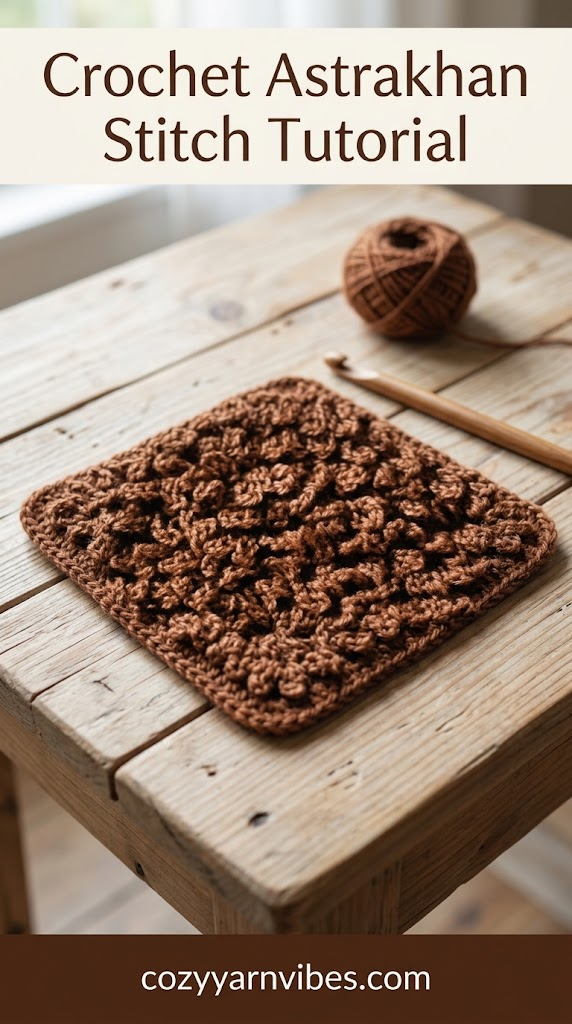
How to Make the Astrakhan Crochet Stitch
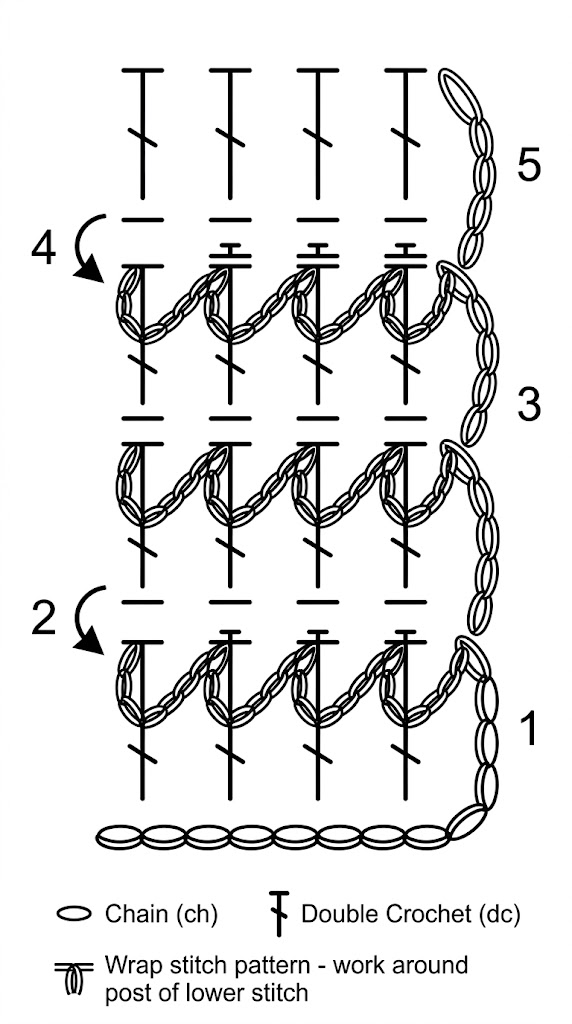
Before starting, make sure you are comfortable with chain stitches, double crochet, and slip stitches. The most important part of this stitch is learning to work the loop row in the opposite direction without turning your project.
Crochet Process for the Astrakhan Stitch
Step 1: Make the Foundation Chain
- Start with any number of stitches.
- Add 2 extra chains to the base chain.
- Keep your foundation chain slightly loose so you can work into the chains easily.
Step 2: Work Row 1
Row 1 (RS):
- Skip the first 3 chains from the hook. These chains count as 1 double crochet (dc).
- Work 1 dc into each chain across the row.
- Do not turn your work.
You now have a full row of double crochet stitches with the right side facing.
Step 3: Work Row 2
Row 2 creates the long loops that give the Astrakhan Stitch its fluffy texture.
- Keep the right side facing.
- Starting from the left side, chain 7.
- Insert your hook into the front loop only of the next double crochet to the right.
- Make 1 slip stitch (slst) to secure the chain loop.
- Repeat ch 7, slst into the front loop only of the next dc to the right across the row.
- At the end, make 7 chains.
- Make a slst into the top of the beginning chain to secure the final loop.
- Do not turn.
You should now have a row of long loops across the front of your work.
Step 4: Work Row 3
Row 3 creates the next solid row while keeping the loops visible.
- Chain 3, counting it as the first double crochet.
- Skip the next stitch.
- Work 1 dc into the back loop only of the next stitch.
- Continue working 1 dc into the back loop only of each stitch from the previous row across.
- Do not turn.
Step 5: Repeat the Pattern
Continue repeating Rows 2 and 3 until your project reaches the desired length.
Row 2:
Ch 7, slst into the front loop only of the next dc to the right; repeat across.
Row 3:
Ch 3, skip 1 stitch, dc into the back loop only of the next and each stitch across.
Always keep the right side facing and remember not to turn your work. The repeated chain-7 loops will gradually build the distinctive textured surface of the Astrakhan Stitch.
Tips for Perfect Astrakhan Crochet Stitches
- Keep your tension relaxed when making the chain loops.
- Make each loop approximately the same length.
- Remember not to turn your work between rows.
- Work carefully into the front loop only when creating the loop row.
- Work into the back loop only during the double crochet row.
- Count your stitches so the loop placement stays even.
- Avoid pulling the slip stitches too tightly.
- Use a smooth yarn while learning so you can clearly see your stitches.
- Try a thicker or plush yarn once you are comfortable with the technique.
- Practice on a small swatch before starting a large project.
Common Mistakes to Avoid
The Astrakhan crochet stitch can feel unusual for beginners because the work moves in two different directions without being turned. Paying attention to stitch placement will make the pattern much easier.
Here are some common mistakes to watch for:
- Turning the work after the loop row.
- Working the slip stitch into the wrong loop.
- Forgetting to skip the first double crochet.
- Missing the back loop when working the next double crochet row.
- Making some chain loops much longer than others.
- Pulling the loops too tightly.
- Forgetting to secure the final loop at the turning chain.
- Losing track of the direction in which you are working.
If your loops are uneven, check your chain length and tension before continuing.
Projects You Can Make with the Astrakhan Stitch
The thick, textured surface of the Astrakhan crochet stitch makes it especially suitable for projects where you want warmth and a plush appearance.
Rugs and Bath Mats
Astrakhan stitch can create a thick, shaggy surface that works well for rugs and bath mats. A larger hook and thicker yarn can help create a soft, cozy texture.
Scarves
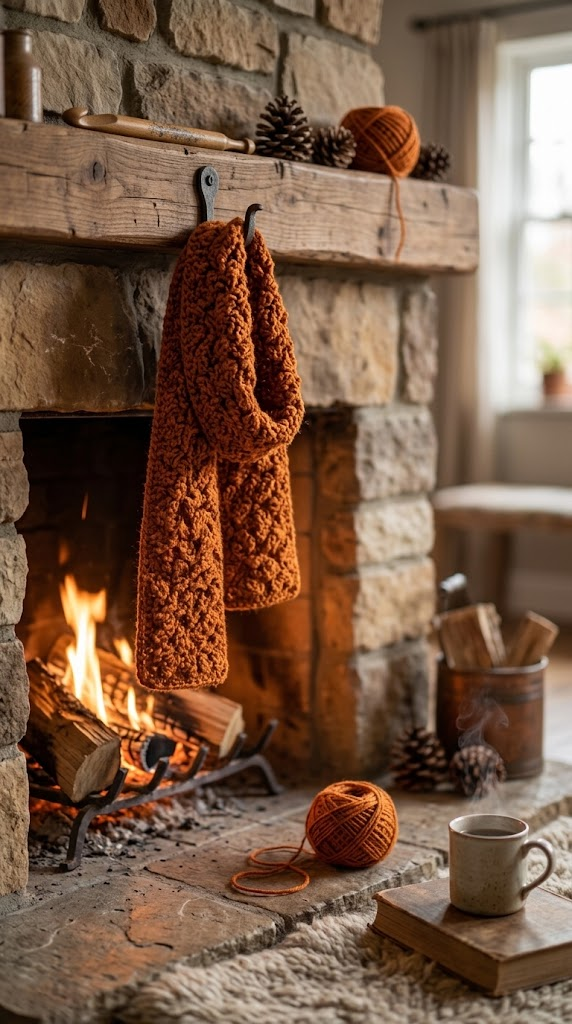
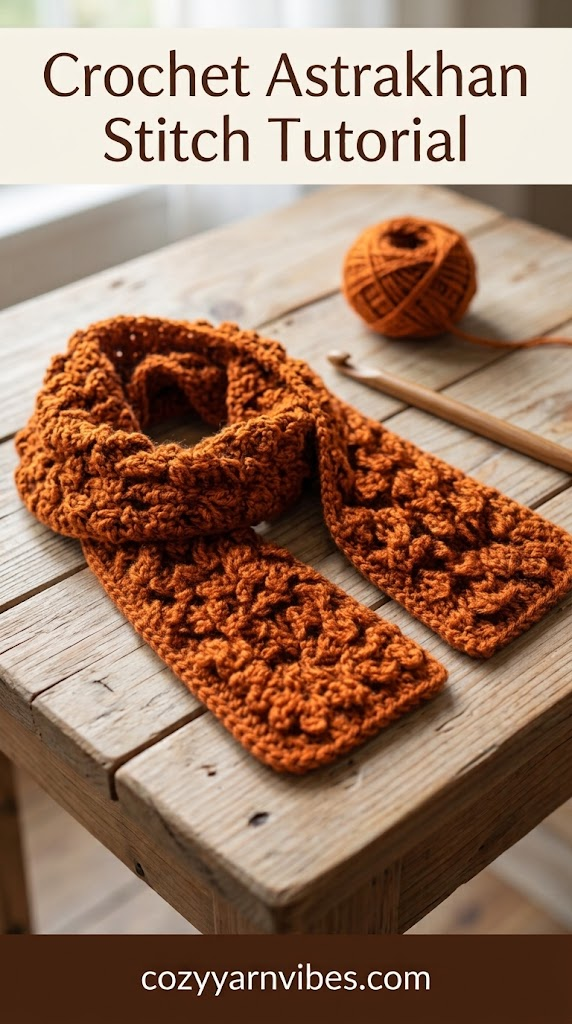
Use the stitch to make a warm textured scarf. The raised loops give a simple scarf more dimension and make it particularly suitable for cold-weather accessories.
Blankets
The stitch can be used for blankets and throws when you want a plush, highly textured surface. Soft yarn can make the finished fabric especially cozy.
Cushion Covers
Use Astrakhan stitch on cushion covers to create a fluffy decorative texture. It can also be combined with rows of simpler stitches for contrast.
Hats and Winter Accessories
The dense texture makes the stitch suitable for warm hats, ear warmers, cowls, and other winter accessories.
Bags
Astrakhan stitch can also be used for textured bags, pouches, and purses. For bags, choose a yarn that provides enough structure for the finished project.
Home Décor
The stitch can be incorporated into table mats, decorative panels, throws, and other home décor projects where a raised texture is desired.
Variations of the Astrakhan Stitch
Once you are comfortable with the basic Astrakhan crochet stitch, you can experiment with different yarns, colors, and loop lengths.
- Short Loop Astrakhan: Use fewer chains to create smaller, more compact loops.
- Long Loop Astrakhan: Increase the number of chains for a longer, shaggy texture.
- Colorful Astrakhan: Use a different color for the loop rows to make the texture stand out.
- Dense Astrakhan: Use closer stitches or thicker yarn to create a fuller surface.
- Soft Plush Astrakhan: Try chenille or other plush yarns for an especially cozy texture.
- Mixed Stitch Astrakhan: Combine textured rows with plain double crochet or other simple stitches.
You can also experiment with different crochet stitch heights. Some variations use half treble or other stitches instead of double crochet to change the density and appearance of the fabric.
More Crochet Stitch Tutorials
Continue building your crochet skills with these beginner-friendly stitch guides:
- Single Crochet Stitch (sc)
- Half Double Crochet Stitch (hdc)
- Double Crochet Stitch (dc)
- Treble Crochet Stitch (tr)
- Shell Stitch
Learning basic crochet stitches makes it easier to understand textured techniques such as the Astrakhan crochet stitch. Once you are comfortable with the unusual left-to-right loop row, you can use this stitch in many different projects.
Conclusion
The Astrakhan crochet stitch is a distinctive technique that creates soft, raised loops across the surface of your crochet fabric. Although the direction of the work may feel unusual at first, the stitch uses simple techniques such as chain stitches, double crochet, and slip stitches.
Start with a small swatch and focus on keeping your loops even. Once you understand when to work into the front loops and back loops and remember not to turn your work, you can experiment with different yarns, loop lengths, and colors to create your own textured crochet projects.
Frequently Asked Questions (FAQs)
1. Is the Astrakhan crochet stitch suitable for beginners?
Yes, although it may take beginners a little practice to get used to working the loop row from left to right. Basic knowledge of chain, double crochet, and slip stitch is helpful.
2. Why is it called the Astrakhan stitch?
The name refers to Astrakhan, a region associated with the curly, textured fleece of Karakul sheep. The crochet stitch creates a similar soft, curly appearance and is also known as the twisted loop stitch.
3. Do I turn my work when making the Astrakhan stitch?
No. In the traditional version, you keep the right side facing throughout the pattern. The loop row is worked from left to right, and the following double crochet row is worked from right to left.
4. How many chains are used to make the loops?
The standard version commonly uses 7 chains for each loop. You can adjust this number to make the loops shorter or longer.
5. Why do my Astrakhan loops look uneven?
Uneven tension is usually the main cause. Try making each chain loop with the same number of chains and avoid pulling the slip stitches too tightly.
6. What yarn is best for Astrakhan stitch?
You can use many different yarn weights. A smooth, medium-weight yarn is useful when learning because the stitches are easy to see. Plush or chenille yarn can create a softer, more furry effect once you are comfortable with the technique.
7. What can I make with Astrakhan stitch?
Astrakhan stitch works well for rugs, bath mats, scarves, blankets, cushion covers, hats, bags, and other projects where you want a thick, raised texture.