
The spike crochet stitch is a beautiful textured stitch that adds depth and visual interest to your crochet projects. Unlike regular stitches that are worked into the next stitch or space, the spike stitch is worked into a stitch or space from a lower row. This creates elongated stitches that stand out from the surface of the fabric.
The spike crochet stitch is easy to learn once you understand where to insert your hook. It works especially well with contrasting colors, making the elongated stitches more noticeable. You can use this stitch for blankets, scarves, garments, bags, home décor, and many other crochet projects.
In this guide, you’ll learn what the spike crochet stitch is, how to crochet it step by step, helpful tips for beginners, common mistakes to avoid, and project ideas.
Spike Stitch Definition
The spike crochet stitch is a decorative crochet technique made by inserting the hook into a stitch or chain space from a previous row and pulling up a loop. Because the stitch is worked lower than the current row, it becomes longer than a regular crochet stitch and creates a raised or elongated appearance.
Spike stitches can be worked with different crochet stitches, including single crochet, half double crochet, and double crochet. The exact technique depends on the pattern.
In this tutorial, the spike crochet stitch is used with double crochet sections and chain spaces to create a textured, colorful fabric.
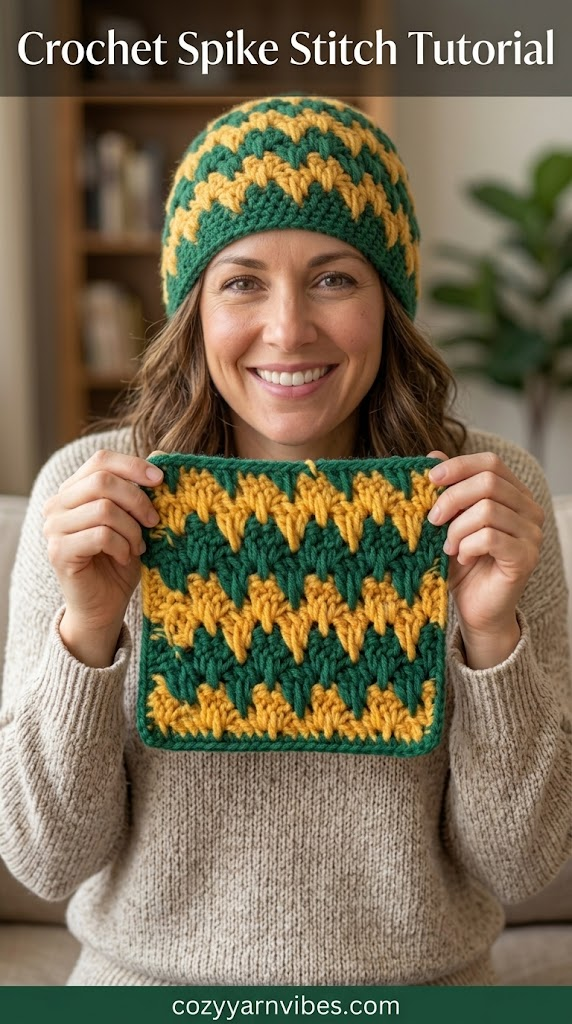
How to Make the Spike Crochet Stitch
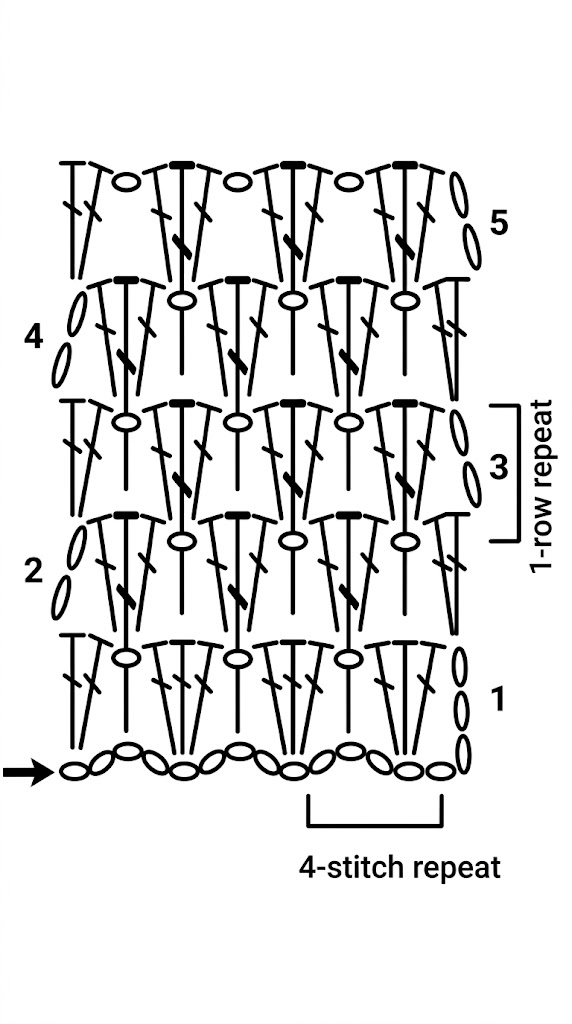
This spike crochet stitch pattern uses double crochet stitches and elongated double crochets worked into the previous row. The foundation row creates chain spaces, while the following rows use the spike stitch to create the raised texture.
Step 1: Make the Foundation Chain
The foundation chain should follow this formula:
Multiple of 4 + 1, plus 4 beginning chains
For a practice swatch, chain 25:
4 × 5 + 1 + 4 = 25 chains
This gives you the correct number of chains to begin the pattern.
Step 2: Work Row 1
Use Color A for the first row.
- Work 3 double crochets (3dc) into the 5th chain from the hook.
- Chain 1 and skip the next 3 chains.
- Work 3 double crochets into the next chain.
- Repeat ch 1, skip 3 chains, 3dc in the next chain across the row.
- When you reach the last 4 chains, chain 1, skip the next 3 chains, and work 2 double crochets into the last chain.
- Turn your work.
You should now have groups of 3 double crochets separated by chain-1 spaces.
Step 3: Work the Foundation Spike Stitch
Continue with Color A for Row 2. This row introduces the foundation spike stitch, or f-spike-st.
To make one f-spike-st:
- Work 1 double crochet into the indicated chain-1 space.
- Insert your hook into the middle chain of the group of 3 chains from the previous row.
- Work 1 elongated double crochet into that chain. Pull the loop up to the height of the current row.
- Work 1 more double crochet into the same indicated chain-1 space.
This creates a three-stitch group with the elongated double crochet in the center.
Step 4: Complete Row 2
- Chain 2.
- Work 1 f-spike-st over the next chain-1 space.
- Chain 1.
- Work another f-spike-st over the next chain-3 space.
- Continue repeating ch 1, f-spike-st across the row.
- When you reach the turning chain, chain 1 and work 2 double crochets into the turning chain.
- Turn your work.
- Change to Color B for the next row.
Step 5: Work the Regular Spike Stitch
Row 3 uses the main spike crochet stitch. The difference is that the elongated double crochet is worked into the middle double crochet of the 3dc group from the previous row.
To make one spike-st:
- Work 1 double crochet into the indicated chain-1 space.
- Insert your hook into the middle double crochet of the group of 3 double crochets from the previous row.
- Work 1 elongated double crochet into that stitch, pulling the loop up to the height of the current row.
- Work 1 more double crochet into the indicated chain-1 space.
The elongated center stitch creates the distinctive raised look of the spike crochet stitch.
Step 6: Complete Row 3
Using Color B:
- Chain 2.
- Work 1 spike-st over the next chain-1 space.
- Chain 1.
- Work 1 spike-st over the next chain-1 space.
- Repeat ch 1, spike-st across the row.
- At the turning chain, chain 1 and work 2 double crochets into the turning chain.
- Turn your work.
Step 7: Repeat the Spike Stitch Pattern
Continue repeating Row 3 to build the length of your project.
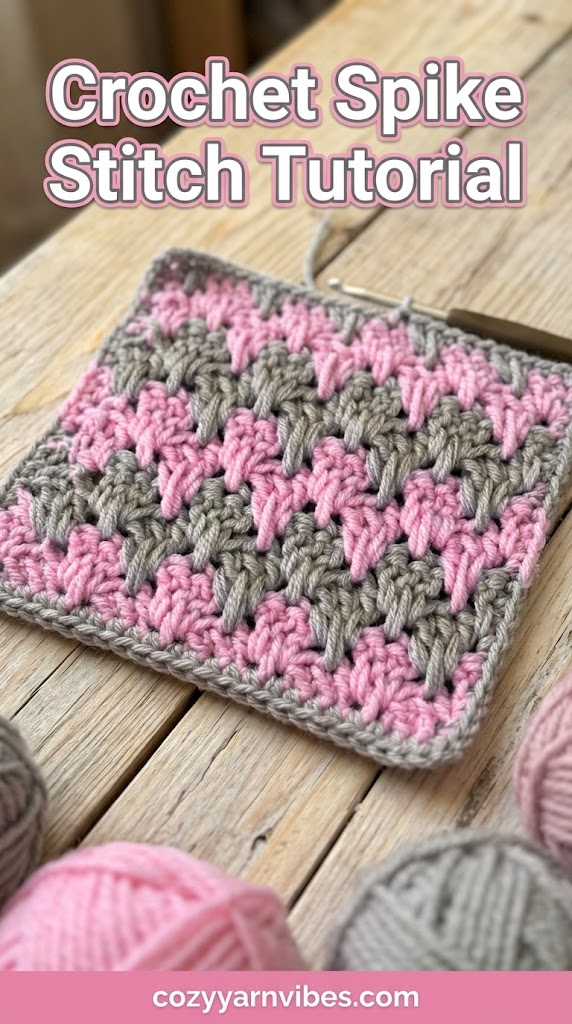
For a striped effect, change colors every two rows. Keep repeating the same spike crochet stitch pattern until your project reaches the desired length.
As you work, make sure each elongated double crochet reaches the height of the current row. This keeps the spike stitches even and gives the finished fabric a neat, textured appearance.
Step 6: Change Colors
For the colorful effect shown in this pattern, change colors every two rows.
After completing two rows with one color, switch to the next color and continue the same spike stitch repeat. Changing colors regularly makes the elongated stitches stand out and gives the fabric a striped appearance.
You can use two contrasting colors or several colors depending on the project you are making.
Tips for Perfect Spike Crochet Stitches
- Keep your tension consistent so every spike stitch has a similar length.
- Make sure you insert your hook into the correct lower space or stitch.
- Count your chain spaces regularly to prevent the pattern from shifting.
- Do not pull the spike stitch too tightly because this can make the fabric bunch up.
- Use contrasting colors if you want the spike stitches to stand out clearly.
- Practice the spike crochet stitch on a small swatch before starting a larger project.
- Keep your double crochet stitches at an even height for a neat edge.
- If your fabric curls slightly, check your tension and make sure you have not missed any spaces.
Common Mistakes to Avoid
The spike crochet stitch is simple, but beginners can make a few common mistakes when learning where to place the hook.
Here are some problems to watch for:
- Working the spike stitch into the wrong space.
- Pulling the spike stitch too tightly.
- Skipping the wrong number of chains or spaces.
- Forgetting the chain-1 spaces between spike stitches.
- Missing the 2 double crochets at the turning chain.
- Changing colors at the wrong point in the repeat.
- Using inconsistent tension, which can make the spike stitches different lengths.
If the pattern begins to look uneven, stop and count your stitches and spaces before continuing.
Projects You Can Make with the Spike Crochet Stitch
The textured appearance of the spike crochet stitch makes it useful for many different crochet projects.
Blankets
Use the spike crochet stitch to create colorful blankets and throws with an attractive textured surface. Alternating colors can create bold stripes or subtle patterns.
Scarves and Shawls
Spike stitches add visual interest without requiring complicated techniques. They are a good choice for scarves, wraps, and lightweight shawls.
Garments
The stitch can be used for crochet tops, cardigans, sweaters, ponchos, and other garments. Choose a suitable yarn and hook size to achieve the desired drape.
Baby Items
Create baby blankets, sweaters, hats, and other handmade items with soft yarn and gentle color combinations.
Home Décor
The spike crochet stitch can add texture to cushion covers, table runners, placemats, blankets, and decorative panels.
Bags and Accessories
Use the stitch for crochet bags, pouches, purses, cowls, headbands, and other accessories where you want a textured finish.
Variations of the Spike Stitch
Once you are comfortable with the basic spike crochet stitch, you can experiment with different versions to create new textures.
- Long Spike Stitch: Work the stitch into a lower row to create a longer, more dramatic texture.
- Short Spike Stitch: Use a closer lower row for a more subtle raised effect.
- Colorful Spike Stitch: Change yarn colors regularly to highlight the elongated stitches.
- Alternating Spike Stitch: Change the placement of spike stitches from row to row for a different surface pattern.
- Spike Stitch Stripes: Use two or more colors and change them every one or two rows.
Small changes in stitch placement, yarn color, and stitch height can create very different results.
More Crochet Stitch Tutorials
Continue building your crochet skills with these beginner-friendly stitch guides:
- Single Crochet Stitch (sc)
- Half Double Crochet Stitch (hdc)
- Double Crochet Stitch (dc)
- Treble Crochet Stitch (tr)
Learning basic stitches makes it easier to understand more decorative techniques such as the spike crochet stitch. Once you are comfortable with the placement and repeat, you can use this stitch in many creative crochet patterns.
Conclusion
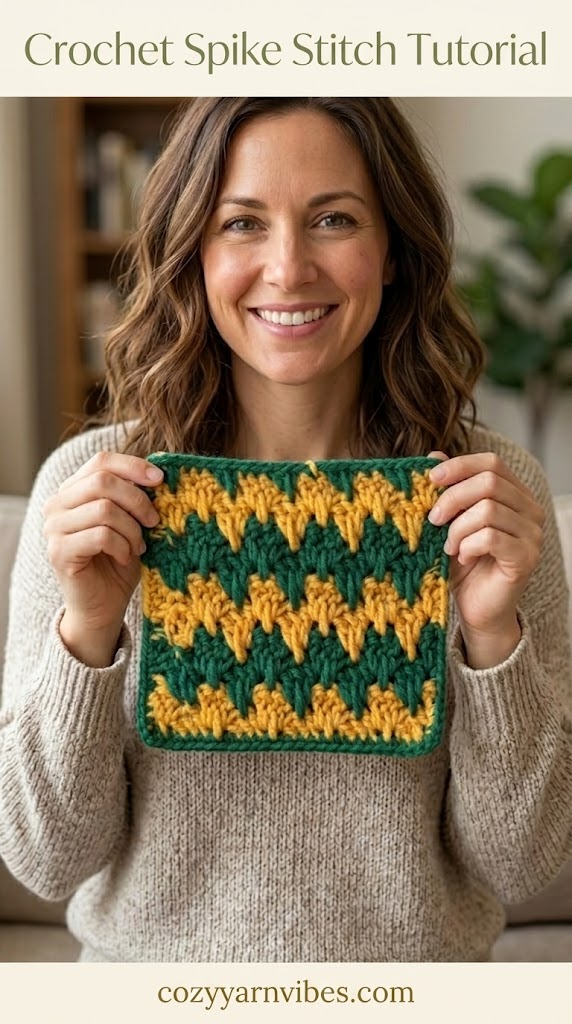
The spike crochet stitch is an easy and versatile technique that gives crochet fabric a beautiful raised texture. Its elongated stitches are particularly attractive when worked in contrasting colors, making it a great choice for blankets, scarves, garments, accessories, and home décor.
Start with a small swatch using the 25-chain example and practice keeping your spike stitches even. Once you understand the repeat, you can adjust the size, colors, and yarn to create your own crochet projects.
Frequently Asked Questions (FAQs)
1. Is the spike crochet stitch suitable for beginners?
Yes. The spike crochet stitch is suitable for beginners who already know basic crochet stitches such as chain and double crochet. The main technique to learn is where to insert the hook to create the elongated stitch.
2. What makes a spike stitch different from a regular crochet stitch?
A spike stitch is worked into a lower stitch or space rather than directly into the current row. This makes the stitch longer and creates a raised texture on the fabric.
3. How many chains do I need for the spike stitch pattern?
The foundation chain follows the formula multiple of 4 + 1, plus 4 beginning chains. For example, a practice swatch can start with 25 chains.
4. Can I use different colors for the spike stitch?
Yes. Color changes are an excellent way to highlight the spike crochet stitch. In this pattern, the colors are changed every two rows.
5. Why do my spike stitches look uneven?
Uneven tension is usually the main reason. Make sure you pull each spike stitch up to a similar height and avoid tightening the loop too much.
6. Can I use the spike stitch for large crochet projects?
Yes. The spike crochet stitch works well for both small and large projects, including blankets, scarves, garments, bags, and home décor. Practice the stitch on a small swatch first to make sure your tension and stitch placement are consistent.