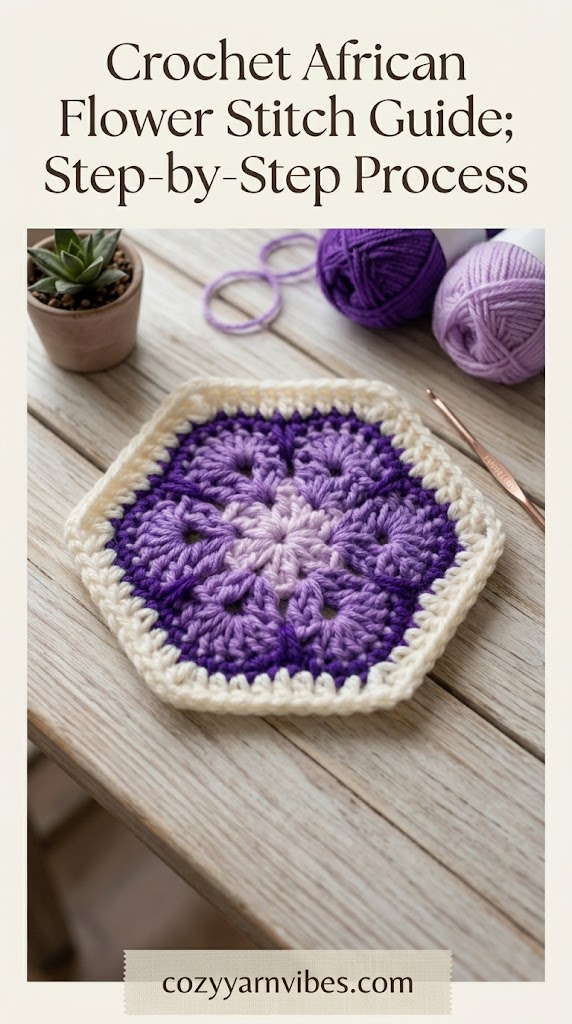
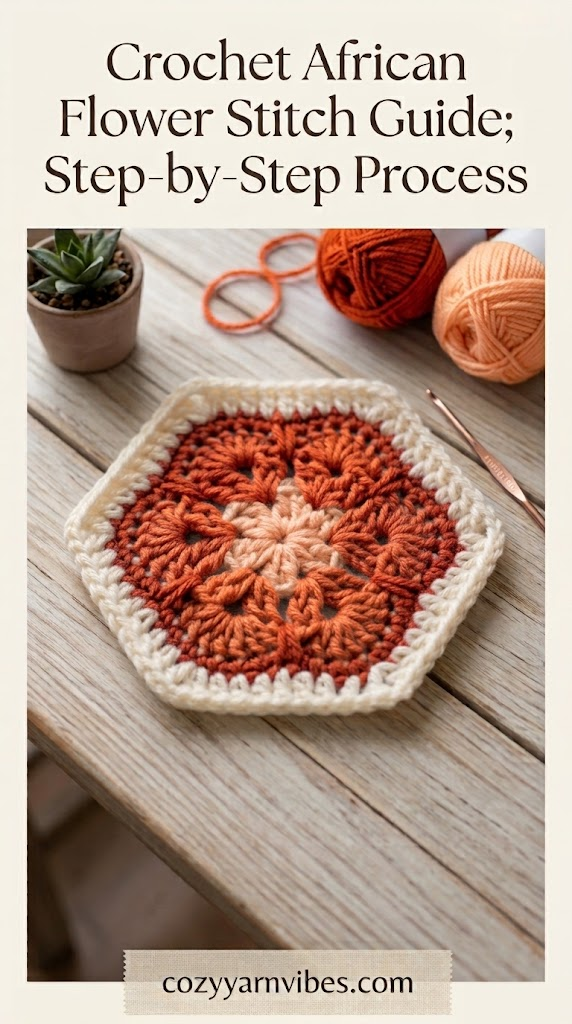
The African Flower Stitch is a beautiful crochet motif known for its layered flower-like center and geometric outer shape. The traditional motif is commonly worked as a hexagon, with rounds of stitches creating raised petals and a structured border. It can also be adapted into squares and other shapes for larger crochet projects.
The African Flower Stitch is especially eye-catching when worked in several colors. You can use contrasting shades for the flower center and petals or choose a coordinated palette for a softer appearance. Once you understand the basic construction, individual motifs can be joined to create blankets, bags, cushions, garments, and other crochet projects.
African Flower Stitch Definition
The African Flower Stitch is a decorative crochet motif that creates a flower with distinct petals surrounded by a geometric border. The traditional version forms a hexagonal shape, although the motif can be modified into squares and other shapes.
The motif is usually worked in multiple rounds, with color changes helping to distinguish the flower center, petals, and outer edges. Common stitches include single crochet, double crochet, and treble crochet, along with chain spaces and slip stitches.
The African Flower Stitch is particularly effective when made with contrasting colors because each round highlights a different part of the flower. Once several motifs are finished, they can be joined together to make larger crochet pieces.
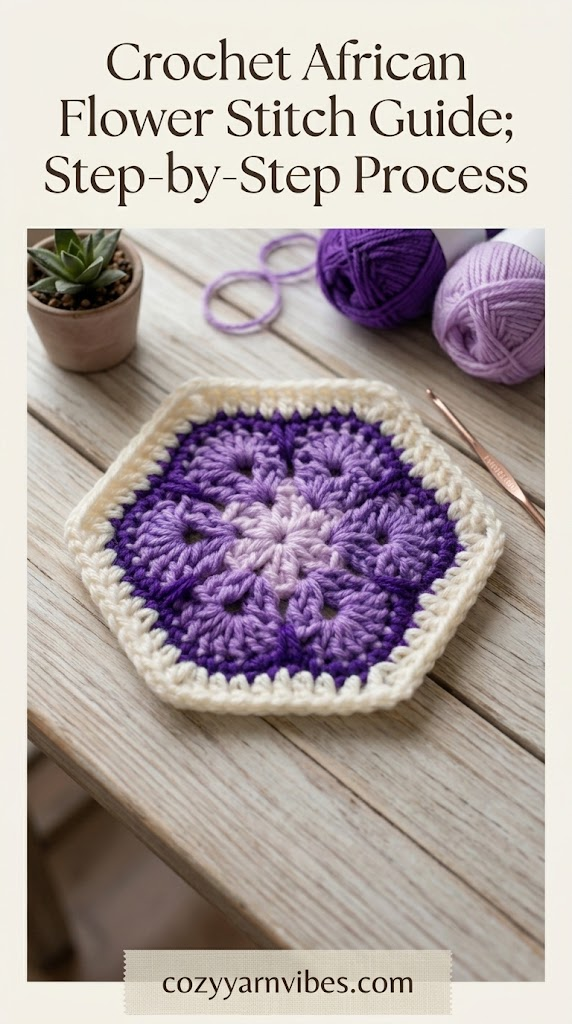
How to Make the African Flower Stitch
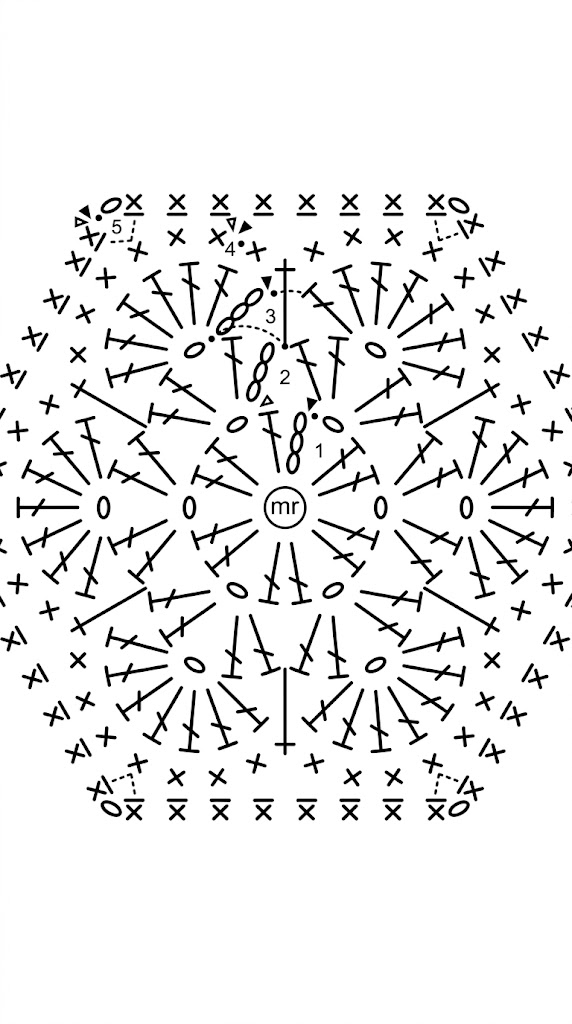
Round 1: Create the Center
Use Color 1 and begin with a magic ring.
- Chain 3. This counts as the first double crochet.
- Work 1 double crochet into the magic ring.
- Chain 1.
- Work 2 double crochet into the ring, then chain 1.
- Repeat the sequence of 2 double crochet and chain 1 five more times around the ring.
- Slip stitch to the top of the beginning chain 3 to join the round.
- Fasten off Color 1.
At the end of Round 1, you should have 6 groups of 2 double crochet, with a chain-1 space between each group.
Round 2: Build the Petal Bases
Join Color 2 in any chain-1 space from Round 1.
- Chain 3. This counts as the first double crochet.
- Working into the same chain-1 space, make 1 double crochet, chain 2, 2 double crochet, and chain 1.
- In the next chain-1 space, work 2 double crochet, chain 2, 2 double crochet, and chain 1.
- Repeat the previous step in each remaining chain-1 space around the motif.
- Join with a slip stitch to the top of the beginning chain 3.
You should now have 6 petal bases, with a chain-2 space in the center of each group.
Round 3: Create the Flower Petals
Continue with Color 2.
- Slip stitch into the first chain-2 space from Round 2.
- Chain 3. This counts as the first double crochet.
- Work 6 double crochet into the same chain-2 space.
- Chain 1.
- In the next chain-2 space, work 7 double crochet, then chain 1.
- Repeat the previous step around the motif until all 6 petal spaces have been filled.
- Join with a slip stitch to the top of the beginning chain 3.
- Fasten off Color 2.
Each group of 7 double crochet forms one rounded flower petal. At the end of this round, you should have 6 petals surrounding the center.
Round 4: Define the Petals
Round 4 is worked in single crochet, with a long single crochet between each petal. This round separates the petals and gives the flower its distinctive layered appearance.
Join Color 3 at the side of any petal.
- Work single crochet stitches around the first petal.
- Between the first and second petals, work 1 long single crochet. Insert your hook into the middle of the corresponding double crochet set from Round 2.
- Pull up a loose loop to the height of the current round.
- Yarn over and pull through both loops on the hook to complete the long single crochet.
- Continue working 1 single crochet into each stitch across the next petal.
- Work another long single crochet between the petals, inserting the hook into the middle of the corresponding double crochet group from Round 2.
- Repeat this sequence around the entire flower, working single crochet stitches across each petal and 1 long single crochet between each petal.
- Join with a single crochet to the top of the starting single crochet.
- Fasten off Color 3.
The long single crochet stitches should pull the fabric inward slightly between the petals, clearly defining the six individual flowers petals.
Round 5: Form the Hexagonal Border
Join Color 4 to a single crochet positioned above the beginning of one of the double crochet petals from Round 3.
- Chain 3. This counts as the first double crochet.
- Work 1 double crochet into each of the next 2 stitches.
- In the next stitch, work 1 double crochet, chain 2, and 1 double crochet. This creates the first corner of the hexagon.
- Work 1 double crochet into each of the next 7 stitches.
- In the next stitch, work 1 double crochet, chain 2, and 1 double crochet to create the next corner.
- Repeat the sequence of 7 double crochet followed by a corner of double crochet, chain 2, and double crochet around the motif.
- Continue until all 6 corners of the hexagon have been formed.
- After completing the sixth corner, work the remaining 4 double crochet stitches to finish the round.
- Fasten off Color 4.
The final round transforms the flower into the traditional six-sided African Flower motif. Each chain-2 space forms a corner of the hexagon, while the double crochet stitches create the straight sides between the corners.
Finishing the African Flower
- Cut the yarn after completing Round 5, leaving a suitable tail for weaving in.
- Use a yarn needle to weave in all loose ends securely on the wrong side of the motif.
- Gently shape the motif so that all six sides and corners are even.
- Block the finished motif if needed to achieve a flatter and more defined hexagonal shape.
Your African Flower motif is now complete and can be used individually or joined with additional motifs to create blankets, bags, cushions, garments, and other crochet projects.
Tips for Perfect African Flower Stitches
- Keep your tension consistent throughout every round.
- Make your chain spaces the same size.
- Count the petal groups after completing each round.
- Make sure the long single crochet stitches are worked into the correct lower round.
- Keep your color changes neat and secure.
- Do not pull the stitches too tightly around the flower petals.
- Block completed motifs if you want sharper, more even edges.
- Make a test motif before beginning a large project.
Using contrasting colors can make the different layers of the African Flower Stitch easier to see. Four-color versions are particularly common, although you can use fewer or more colors depending on your design.
Common Mistakes to Avoid
The African Flower Stitch has several rounds with different stitch placements, so small mistakes can affect the shape of the finished motif.
Here are some common problems to watch for:
- Making the center ring too large.
- Skipping a chain space.
- Working too many or too few stitches into a petal space.
- Missing a long single crochet between petals.
- Placing corner increases incorrectly.
- Changing tension between rounds.
- Forgetting to count the petals before starting the next round.
- Joining the rounds in the wrong stitch.
If your motif starts to curl or the sides do not line up properly, stop and check the stitch count before continuing.
Projects You Can Make with the African Flower Stitch
The African Flower Stitch is versatile because individual motifs can be joined together to create larger pieces. It can be used for blankets, bags, cushions, garments, and decorative projects.
Blankets and Afghans
Join multiple African Flower motifs to create colorful blankets and afghans. Use a repeating color palette for a coordinated design or make each flower different for a stash-friendly project.
Bags and Purses
The structured flower motifs work beautifully for crochet bags and purses. Join several motifs to create the front, back, and sides of a bag.
Cushions
Use African Flower motifs to make decorative cushion covers. Bright flower centers combined with a neutral outer round can create a balanced design.
Garments
African Flower motifs can be joined to create cardigans, skirts, tops, and other garments. Because each motif is worked separately, you can arrange the colors and shapes before joining them together.
Home Décor
Try the African Flower Stitch for throws, table décor, wall hangings, and other decorative pieces. The geometric flower design can add strong visual texture to a room.
Accessories
Smaller motifs can be incorporated into bags, pouches, hats, scarves, and other accessories. You can also use a single finished flower as a decorative appliqué.
Variations of the African Flower Stitch
The traditional African Flower Stitch is generally recognized by its flower-shaped center surrounded by a geometric outline, but there are several ways to modify the design.
African Flower Hexagon
The classic version creates a six-sided motif. The six corners are formed during the outer round, making the motifs easy to join into larger projects.
African Flower Square
An additional round can be used to square off the traditional flower motif. This makes it easier to combine African Flower motifs with conventional granny squares in blankets and other projects.
Different Color Combinations
Try using one color for the center, another for the petals, a contrasting shade for the petal outlines, and a neutral color for the outer edge.
You can also make the entire motif in one color for a more subtle textured effect.
Different Yarn Weights
Changing the yarn weight and hook size changes the finished dimensions and appearance of the motif. Thinner yarn creates a smaller, more delicate flower, while thicker yarn produces a larger, bolder motif.
More Crochet Stitch Tutorials
Continue building your crochet skills with these beginner-friendly stitch guides:
- Single Crochet Stitch (sc)
- Half Double Crochet Stitch (hdc)
- Double Crochet Stitch (dc)
- Treble Crochet Stitch (tr)
- Shell Stitch
- Angel Stitch
Learning the African Flower Stitch gives you another versatile motif that can be used on its own or combined with other crochet designs.
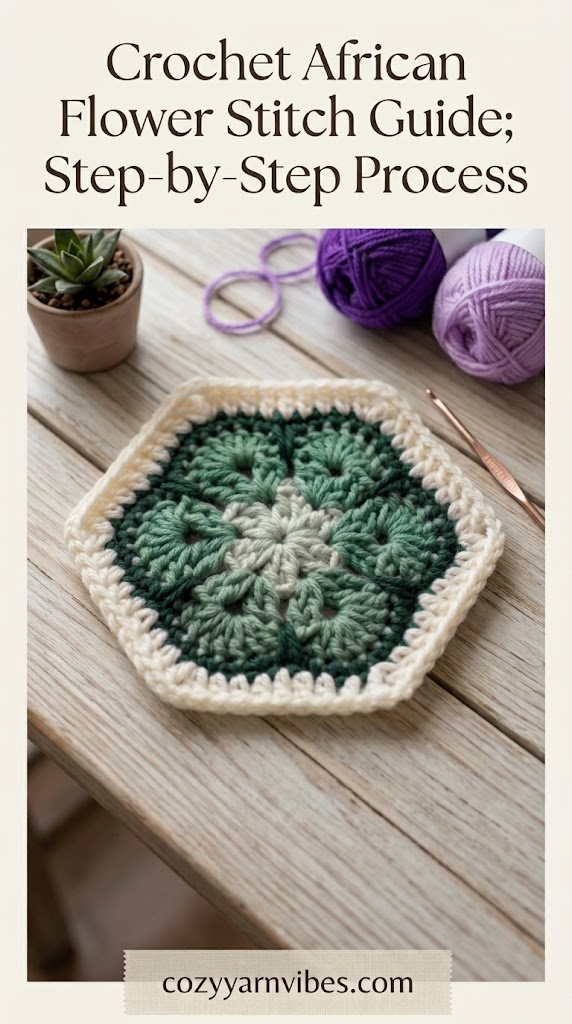
Conclusion
The African Flower Stitch is a beautiful crochet motif that combines flower-shaped petals with a geometric outer structure. Its layered construction makes it especially attractive when worked in multiple colors.
Although the motif involves several rounds and careful stitch placement, the pattern becomes much easier once you understand how the center, petals, and outer shape are formed.
Practice one motif first and focus on keeping your tension and stitch placement consistent. Once you are comfortable with the African Flower Stitch, make multiple motifs and experiment with joining them into blankets, bags, cushions, garments, and home décor.
Frequently Asked Questions (FAQs)
- Is the African Flower Stitch suitable for beginners?
The African Flower Stitch can be suitable for adventurous beginners who are comfortable with basic crochet stitches. The multiple rounds and specific stitch placement require some attention, but practicing one motif at a time makes the technique easier to learn.
- What yarn is best for the African Flower Stitch?
You can use different yarn weights depending on the project. A smooth yarn with clear stitch definition makes it easier to see the individual petals and spaces.
- What crochet hook should I use?
Use the crochet hook recommended for your chosen yarn. If you want a softer and more flexible motif, you can experiment with a slightly larger hook, but make a test motif first.
- Can I make an African Flower Stitch in different shapes?
Yes. The traditional motif is commonly made as a hexagon, but it can also be adapted into a square and other shapes.
- How many colors do I need?
There is no fixed number of colors required. You can make the African Flower Stitch with one color or use several contrasting shades. Four-color versions are commonly seen.
- What can I make with the African Flower Stitch?
You can use the motif for blankets, afghans, bags, purses, cushions, garments, accessories, and home décor. Multiple motifs can be joined together to create larger projects.