
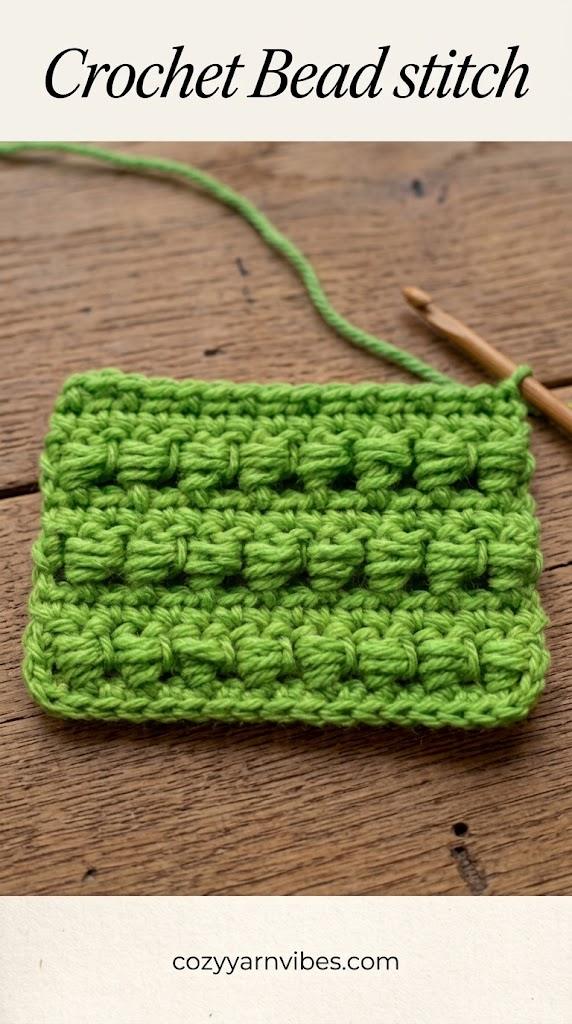
The bead stitch is a beautiful textured crochet stitch that creates small, raised clusters across your fabric. Its dimensional texture gives crochet projects an eye-catching appearance while still using familiar stitches such as single crochet and double crochet.
The bead stitch is worked over a repeating combination of double crochet stitches and a special slanting half double crochet cluster. Once you understand how to work the cluster around the stem of the previous double crochet, the pattern becomes easy to repeat.
In this guide, you’ll learn what the bead stitch is, how to crochet it step by step, helpful tips for keeping your stitches even, common mistakes to avoid, and project ideas for using this textured stitch.
Bead Stitch Definition
The bead stitch is a textured crochet stitch that creates raised, bead-like clusters on the surface of the fabric. The texture comes from a special slanting half double crochet cluster worked around the stem of a previous double crochet.
This stitch combines rows of double crochet, single crochet, and the slanting half double crochet cluster to create a repeating textured pattern. The raised clusters stand out from the fabric, making the bead stitch useful when you want to add dimension to a crochet project.
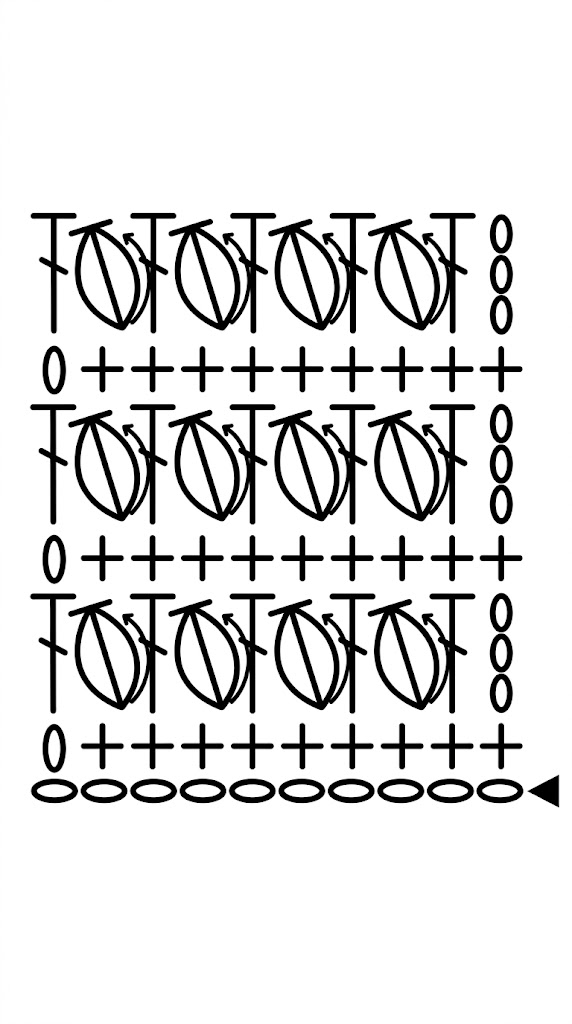
The pattern is worked over a foundation chain made with any multiple of 2 stitches. Rows 2 and 3 are then repeated until you reach the desired length.
Bead Stitch Abbreviations
This pattern uses US crochet terms.
Spch chain
Dc double crochet
Sl-hdc-cl slanting half double crochet cluster
Rep repeat
Sc single crochet
Sk skip
st (sts) stitch (stitches)
Special Stitch
sl-hdc-cl: Slanting Half Double Crochet Cluster
The slanting half double crochet cluster is the special stitch that creates the raised bead-like texture in this pattern.
To make a sl-hdc-cl, yarn over, insert your hook around the stem of the previous double crochet from right to left, yarn over, and pull up a loop.
Repeat this movement three times in the same place. You will have six loops on your hook.
Yarn over and pull through the first six loops on your hook. Then yarn over again and pull through the remaining two loops on your hook.
This completes one slanting half double crochet cluster.
How to Make the Bead Stitch
Follow these steps to crochet the bead stitch pattern.
Step 1: Make a Foundation Chain
Start with a foundation chain made from any multiple of 2 stitches.
The number of chains you make will determine the width of your project. For a practice swatch, choose a foundation chain long enough to create several repeats of the pattern.
Step 2: Work the First Row
Insert your hook into the second chain from the hook and work 1 single crochet.
Continue working 1 single crochet in each chain across the foundation chain.
When you reach the end, turn your work.
This creates the single crochet foundation row that supports the textured bead stitch pattern in the following rows.
Step 3: Begin the First Bead Stitch Row
For Row 2, chain 3. This chain 3 counts as the first double crochet.
Skip the first single crochet.
Work 1 double crochet into the next single crochet.
The bead-like texture is created around the stem of this double crochet, so do not fasten off or move to another stitch before making the special cluster.
Step 4: Make the Slanting Half Double Crochet Cluster
After making the double crochet, work 1 sl-hdc-cl around the stem of the previous double crochet from right to left.
To make the cluster, yarn over and insert your hook around the stem of the previous double crochet. Yarn over and pull up a loop.
Repeat this same movement two more times in the same place. You should now have six loops on your hook.
Yarn over and pull through the first six loops on your hook.
Yarn over once more and pull through the remaining two loops on your hook.
Your slanting half double crochet cluster is complete.
The cluster sits against the previous double crochet and creates the raised bead-like detail that gives this stitch its name.
Step 5: Repeat the Pattern
After completing the sl-hdc-cl, skip the next single crochet.
Work 1 double crochet into the following single crochet, then make another sl-hdc-cl around the stem of that double crochet.
Continue repeating this sequence across the row: 1 double crochet, 1 sl-hdc-cl, skip the next single crochet.
When you reach the end of the row, work 1 double crochet into the last chain.
Turn your work.
Step 6: Work the Next Row
For Row 3, chain 1.
Skip the first double crochet.
Work 1 single crochet into the first sl-hdc-cl.
Then work 1 single crochet into the next double crochet.
Continue repeating this sequence across the row: 1 single crochet in the sl-hdc-cl, followed by 1 single crochet in the next double crochet.
When you reach the end, work 1 single crochet into the turning chain.
Turn your work.
Step 7: Repeat the Pattern
Rows 2 and 3 create the complete bead stitch pattern repeat.
Continue repeating Row 2 and Row 3 until your work reaches the desired length.
Keep the stitch sequence consistent throughout the project. Row 2 creates the raised bead-like clusters, while Row 3 uses single crochet stitches to work back across the textured row and prepare the fabric for the next repeat.
Pro Tip: When working the sl-hdc-cl, make sure all three sets of loops are pulled up to a similar height. This helps keep the bead-like clusters even and gives the finished fabric a more consistent texture.
Tips for Perfect Bead Stitches
- Keep your yarn tension consistent throughout the project.
- Make sure the foundation chain contains a multiple of 2 stitches.
- Remember that the chain 3 at the beginning of Row 2 counts as a double crochet.
- Work the sl-hdc-cl around the stem of the previous double crochet from right to left.
- Pull each loop up to a similar height when making the cluster.
- Count your stitches at the end of each row to catch mistakes early.
- Keep track of which row you are working because Rows 2 and 3 have different stitch patterns.
- Practice the special cluster on a small swatch before starting a larger project.
Common Mistakes to Avoid
The bead stitch involves a special cluster worked around the stem of a double crochet, so placement is especially important.
Avoid these common mistakes:
- Forgetting that the chain 3 counts as the first double crochet.
- Working the sl-hdc-cl around the wrong stitch.
- Inserting the hook into the stitch instead of around the stem of the previous double crochet.
- Forgetting to skip the required single crochet in Row 2.
- Working the wrong single crochet sequence in Row 3.
- Making the loops in the sl-hdc-cl different heights.
- Forgetting the final double crochet at the end of Row 2.
- Forgetting to work the final single crochet into the turning chain in Row 3.
If your bead stitches appear uneven or do not line up properly, check the placement of your clusters and make sure each one is worked around the correct double crochet stem.
Projects You Can Make with the Bead Stitch
The raised texture of the bead stitch makes it a useful choice for crochet projects where you want a decorative surface and extra visual interest.
Blankets
Use the bead stitch to add texture to baby blankets, throw blankets, lap blankets, and afghans. The repeating clusters can create an attractive patterned surface without requiring complicated color changes.
Scarves and Shawls
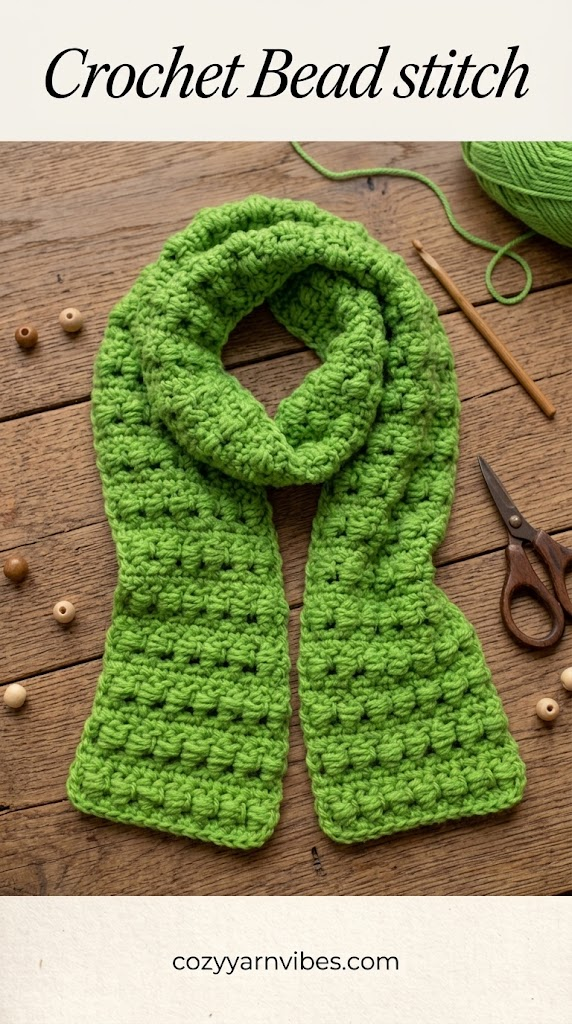
The bead stitch can add dimension to scarves and shawls while creating a detailed, handmade appearance. Choose a soft yarn to make a comfortable accessory with an interesting texture.
Garments
Use bead stitch sections in sweaters, cardigans, vests, ponchos, and other garments. You can work the stitch throughout a project or combine it with simpler crochet stitches for contrast.
Baby Items
The textured design can be used for baby blankets, sweaters, hats, and other handmade baby accessories. Soft yarn can help create a comfortable finished fabric.
Home Décor
Add raised texture to cushion covers, pillow covers, table runners, placemats, baskets, and other home décor projects. The bead-like clusters can make a simple project look more detailed.
Accessories
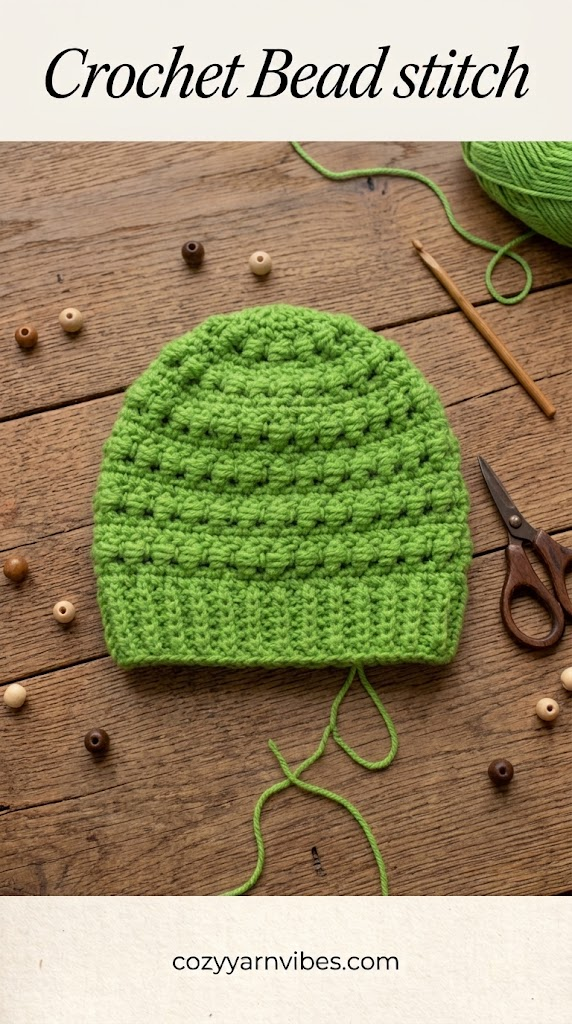
The bead stitch can also be used for bags, purses, cowls, hats, headbands, and other accessories. Its textured appearance works particularly well on projects where the stitch pattern is easy to see.
Variations of the Bead Stitch
Once you are comfortable with the basic bead stitch, you can experiment with how you incorporate the textured clusters into your projects.
- Use contrasting colors between the textured rows to make the bead clusters more noticeable.
- Combine bead stitch sections with rows of single crochet for a simpler texture.
- Use bead stitches as decorative panels within a larger project.
- Combine the stitch with other textured crochet stitches to create a more detailed pattern.
- Experiment with different yarn weights to change the size and appearance of the bead-like clusters.
The basic stitch pattern remains the same, but changing the yarn, colors, and surrounding stitches can give your finished project a completely different look.
More Crochet Stitch Tutorials
Continue building your crochet skills with these beginner-friendly stitch guides:
- Single Crochet Stitch (sc)
- Half Double Crochet Stitch (hdc)
- Double Crochet Stitch (dc)
- Treble Crochet Stitch (tr)
Learning different crochet stitches makes it easier to combine textures and create your own crochet designs. Once you are comfortable with the bead stitch, try combining it with basic stitches to create interesting patterns and textured sections.
Conclusion
The bead stitch is a beautiful way to add raised texture and visual interest to crochet projects. Its distinctive bead-like clusters are created using a special slanting half double crochet cluster worked around the stem of a previous double crochet.
The pattern may look complicated at first, but it follows a simple two-row repeat. Row 2 creates the textured clusters, while Row 3 works single crochet stitches across the row.
With consistent tension and careful stitch placement, you can use the bead stitch to create attractive blankets, scarves, garments, accessories, and home décor projects. Practice the special cluster on a small swatch first, then repeat Rows 2 and 3 until you reach your desired length.
Frequently Asked Questions (FAQs)
1. Is the bead stitch suitable for beginners?
Yes. The bead stitch can be learned by beginners who are comfortable with basic crochet stitches such as single crochet and double crochet. The slanting half double crochet cluster requires a few extra steps, but it becomes easier with practice.
2. What is the special stitch used in the bead stitch?
The special stitch is called a slanting half double crochet cluster, or sl-hdc-cl. It is worked around the stem of the previous double crochet from right to left and creates the raised bead-like texture.
3. How many loops are used to make the sl-hdc-cl?
After repeating the yarn-over and pull-up-loop movement three times in the same place, you should have six loops on your hook. You then yarn over and pull through the first six loops before completing the stitch through the remaining two loops.
4. What does the chain 3 at the beginning of Row 2 mean?
The chain 3 at the beginning of Row 2 counts as the first double crochet. This is why the first single crochet of the previous row is skipped before working the next double crochet.
5. What is the foundation chain multiple for the bead stitch?
The foundation chain should be made using any multiple of 2 stitches. This allows the repeating stitch pattern to fit correctly across the row.
6. Why does my bead stitch look uneven?
Uneven bead stitches can result from inconsistent tension or from pulling the loops in the sl-hdc-cl to different heights. Try to keep each loop similar in height and work the cluster around the correct double crochet stem.
7. How do I repeat the bead stitch for more rows?
Repeat Rows 2 and 3 until your project reaches the desired length. Row 2 creates the bead-like clusters, while Row 3 works single crochet stitches across the textured row.
8. What can I make with the bead stitch?
The bead stitch can be used for blankets, scarves, shawls, garments, baby items, bags, hats, cushion covers, baskets, and other accessories or home décor projects.